

Home ice bath chillers is a practical entry point for anyone seeking evidence-based recovery, stress reduction, or enhanced wellness routines using modern ice bath chiller systems—all without the mess and unpredictability of traditional ice methods. With demand for premium at-home cold therapy increasing, understanding what really works, how to use equipment safely, and what results to expect is critical for beginners and experienced buyers alike.
This guide uses plain language and realistic advice to help you understand, plan, and maintain a safe, effective cold plunge routine at home using a chiller system.
Key Takeaways
- Home ice bath chillers maintain steady water temperatures in various climates, making consistent cold recovery possible without daily ice purchases.
- Beginners should prioritize safe starting temperatures and gradual exposure rather than aiming for extreme sessions; chilling systems allow more precise control.
- Regular maintenance—including cleaning and water changes—is needed to keep your setup safe and high-performing over time.
- The Core Concept: What Is a Cold Plunge at Home Guide?
- Step-by-Step Home Use Guide
- Advanced Analysis & Common Pitfalls
- Conclusion: Should You Start a Cold Plunge at Home?
- FAQ
The Core Concept: What Is a Cold Plunge at Home Guide?
A cold plunge at home guide introduces the concept of using cold water immersion—typically between 10-15°C (50-59°F)—to recover from exercise, reduce stress, or boost personal wellness, all from the comfort of your own space. The key difference between using a home ice bath chillers and simply dumping ice into a tub is precision, safety, and convenience.
Home ice bath chillers are specialized devices that keep water at a constant, pre-set temperature. This automated cooling system replaces the hassle and inconsistency of buying, handling, and melting ice. Chill systems also often include filtration and basic water sanitation, which manual setups lack.
This approach lets you repeat sessions with minimal preparation—ideal for routines, recovery plans, or shared family use. Beginners should note that switching to a ice bath chiller system streamlines results, but starting slow and focusing on safety is essential.
For a complete breakdown of how chillers work and the main setup steps, see our detailed guide on how an ice bath chiller works.
In summary: Home ice bath chillers make cold therapy more accessible and controlled, but responsible use and understanding your body’s limits matter most when starting out.
Step-by-Step Home Use Guide
1. Preparation
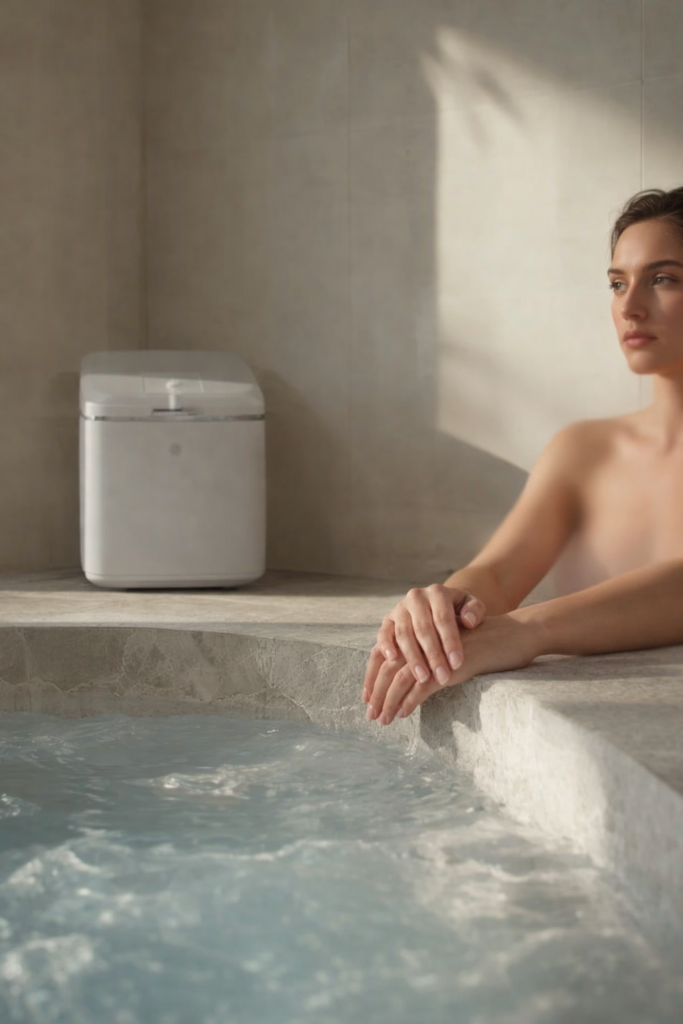
- Choose a level, non-carpeted space with ground fault circuit protection for the chiller—garage, patio, or tiled bathroom are common options.
- Inspect your chiller for any manufacturer warnings and ensure all hose and electrical connections are dry and secure.
- Fill your plunge tub with clean water before powering the chiller. Use a floating thermometer to monitor temperature even if your system has a built-in display.
2. Temperature Range for Beginners
- Set your target temperature between 12–15°C (53–59°F), at the warmer end of the safe range (read more).
- Allow at least an hour (varies by chiller power and room temp) for the water to reach your desired setting before first use.
3. Safe Session Duration
- Start with 2–5 minutes for your very first sessions. There is no added benefit to pushing past the recommended duration. Exiting after feeling uncomfortably numb, dizzy, or shaky is advised. (source)
- If comfortable, gradually extend later sessions to a maximum of 5–10 minutes as your body adapts. Never go beyond 15 minutes to avoid hypothermia or injury. (details)
4. Frequency Recommendations
- For beginners, 2–3 sessions per week is sufficient once you have tolerated initial exposure. Always consult a doctor before starting if you have a heart condition, blood pressure issues, or take medication.
- Increase only if you have no adverse reactions, and always focus on quality over quantity.
5. Basic Post-Use Cleaning
- Drain after 1–2 weeks of use, or sooner if the water becomes cloudy or smells unusual.
- Clean the tub with mild soap and rinse thoroughly. Periodically sanitize any removable filters.
- Check for standing water on the floor and dry completely to reduce mold and slip risk.
For practical cleaning and maintenance strategies that save time and reduce hassle, see our overview of ice bath chiller cleaning tips.
Beginner summary: Start at a warmer temperature and short duration, gradually build up, and always listen to your body. Regularly check equipment and water quality for the safest results.

Advanced Analysis & Common Pitfalls
Common Real-World Limitations
- Noise: Most home ice bath chillers produce a low to moderate hum. If noise matters, check decibel ratings before purchasing.
- Energy Use: Chill performance drops in hot rooms or during summer. The colder your desired water temperature, the more electricity and time are required to reach it.
- Cleaning Frequency: Expect to drain and clean the system every 1–2 weeks, or after heavy use, to avoid algae, biofilm, or odors. Not all filters catch fine particles.
- Space:** Chill setups need floor drainage in case of leaks, plus 3–4 feet of clear space around the tub. Some systems require a dedicated power outlet—avoid extension cords.
- Startle Response: Many new users find the initial cold overwhelming and stop after only a few uses. Slow acclimation (starting with cold showers, shorter plunges) helps retention.
| Manual Ice Bath | Chiller System |
|---|---|
| Requires daily ice purchase or freezing | Maintains set temperature automatically |
| Water gets dirty quickly | Filtration prolongs water freshness |
| Mess from melting ice, difficult to clean | Simple refill and rinse cycles |
| Unstable water temperature, more risk | More consistent and safe, but requires monitoring |
| No electrical risks | Requires safe power source & waterproof safety checks |
Key Issues Beginners Face
- Electrical safety: Power cords and moisture can be a hazard. Use GFCI outlets and keep all plugs far from splash zones.
- Water leaks: Regularly inspect hose connections and seals. Unnoticed leaks can damage floors and increase mold risk—lay a water-sensitive mat as a fail-safe.
- Mold and biofilm: Always dry the tub completely between uses. Ventilation is critical, especially in humid climates.
- Medical oversights: Never skip a medical check if you have heart, blood pressure, or neurological questions. Always use a buddy system your first few sessions (guidance here).
- Too aggressive too soon: Trying extreme settings may reduce compliance or cause adverse reactions. Focus on gradual progress and listen to your body’s cues.
Related: Our ice bath for beginners plan walks through easy, supervised first sessions.
Summary: Home cold plunge routines offer convenience and control, but require a consistent cleaning, cautious electrical setup, and slow personal acclimation. This approach best fits those who enjoy structured wellness routines and can maintain regular upkeep.
Conclusion: Should You Start a Cold Plunge at Home?
Modern chiller-based systems make structured cold water recovery more accessible at home—but starting slow and following safety guidelines is essential. Real progress comes from consistency, not intensity. Maintenance, practical setup, and monitoring are ongoing tasks, but with a reliable approach, most beginners quickly find their comfort zone.
The cold plunge at home guide gives you a roadmap for safe and consistent use—no hype, just clear steps and honest boundaries. Consider your wellness goals, available time for cleaning, and your willingness to learn before investing in a chiller. Compare your options, review experiences, and seek further advice as needed for your lifestyle.
Ready for more details? See our resource on safe ice bath temperatures for novices or find a summary of evidence-backed cold plunge benefits for recovery.
FAQ
What is the safest starting temperature for a home cold plunge?
For first-time users, 12–15°C (53–59°F) is recommended. Starting on the warmer end helps minimize shock and improves your initial comfort. Use a thermometer to confirm the actual water temperature before each session.
How many times per week should beginners use a home ice bath chiller?
Most guidelines recommend starting with 2–3 sessions per week after initial acclimation, always allowing time for your body to recover between plunges. More frequent use depends on your tolerance and medical status.
Do I need to clean or change the water after every use?
No, but plan to drain and clean your system every 1–2 weeks or sooner if the water becomes cloudy or develops an odor. Quick rinses after each use and keeping the chiller’s filter clean also help maintain safety.
Are home ice bath chillers safe for everyone?
Home ice bath chillers are not recommended for anyone with heart, blood pressure, neurological, or certain metabolic conditions without medical clearance. Always check with your healthcare provider, especially before your first use.
Is a chiller system better than using ice in a tub?
Chiller systems offer stable temperatures, reduced mess, and more consistent routines compared to buying and melting ice daily. This makes them more suitable for regular use. However, they do require safe setup, ongoing maintenance, and upfront investment.